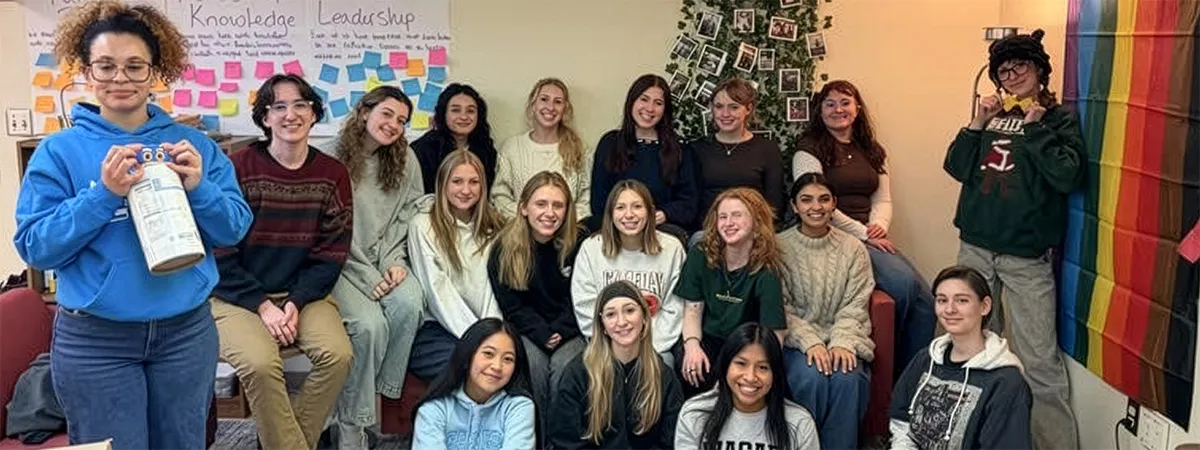
The WSU Peer Health Educators are a diverse group of undergraduate leaders who work with us to educate and empower their fellow students. Students who participate in this program facilitate workshops, represent health education at campus events, and collaborate with campus partners.
We consistently hear from students who are interested in peer health education programs, and studies show that students view peer health educators as credible and trustworthy sources of information. The program is supported by the Service and Activity Fee and will help increase our collaboration with students.
How to Get Involved
Participants will receive a range of professional development opportunities, including training and hands-on experience. Peer educators will develop leadership and public speaking skills, foster positive working relationships, and gain foundational knowledge in a variety of health topics, including violence prevention, suicide prevention, mental health, substance use, and sexual health.
Become a Peer Health Educator (PHE)
Peer Health Educators assist with and provide workshops and outreach on topics of violence prevention, substance misuse, mental health and suicide prevention to peers on the WSU Pullman campus.
We hire Peer Health Educators on a semester basis. When we're hiring, applicants can submit a resume on Handshake. If selected, PHE will be required to attend weekly meetings on Wednesdays from 4:00-6:00 p.m.
- PHE work ~10 hours per week
- Schedules are flexible
Resources for You
- Sam's Law requires all public colleges and universities in the state of Washington to establish a hazing prevention committee to increase transparency about hazing education and intervention (see below).
- The law is named after Sam Martinez, a first-year WSU student who died in a hazing-related incident in 2019. For more information about Sam's Law, visit the Washington State Legislature website.
- Social isolation
- Using demeaning names for initiates and demanding titles (Ms., Mr.) for existing members
- Assigning meaningless or impossible tasks
- Requiring new members to carry specific items at all times
- Deceptions
- Behavior and/or activities that reinforce power differentials
- Verbal abuse, yelling
- Threats or implied threats
- Sleep deprivation
- Requiring "pranks" such as stealing from or harassing another organization
- Skit nights with degrading or humiliating acts
- Requiring new members to perform services for existing members (cleaning, errands)
- Physical abuse
- Sexual abuse
- Forced consumption of alcohol, drugs, and/or disgusting substances
- Abductions and/or limiting someone's ability to leave a situation or place
- Bondage
- Total or partial nudity
Mental Health
Emotional wellness is a lifelong process of developing awareness and acceptance of one’s feelings. Emotional wellness helps you have satisfying relationships, deal with conflict, and bounce back after challenging or stressful times.
Substance Use
Our work with alcohol education focuses on identifying and improving environmental and personal factors that support responsible use of alcohol. We do research to develop effective interventions, evaluate campus programs, and consult campus-wide to guide best practices across the domains of campus life.
According to 2016 National College Health Assessment data, most WSU students perceive that less than 4 percent of students do not consume alcohol. In actuality, roughly 18 percent of WSU students choose not to drink. Of those students who do consume alcohol, about 58 percent do so responsibly (having 4 or fewer drinks).
Alcohol-related program highlights:
Suicide Prevention
Violence Prevention
Everyone has the right to respectful and healthy interactions with their friends, partners, and members of our community. At WSU, we strive to create an environment of safety and accountability. Even so, sex- and gender-based violence like sexual assault, relationship violence, and stalking are as common here as they are on any other college campus.
People experience these forms of violence regardless of sex, gender, sexual orientation, gender identity, race, ethnicity, age, or disability. There are some groups that experience violence at rates higher than others, but it can happen to anyone.
State law and campus policy prohibit all forms of sex- and gender-based violence. Plain language definitions are listed below.
Hazing Prevention
Each student has a part to play in creating a respectful, safe community that welcomes and includes everyone. Hazing hurts individuals and our entire campus community by creating environments of fear and discrimination. Here at WSU, hazing and hazing prevention are taken very seriously in compliance with Sam’s Law and University Policies.
Hazing violates WSU’s community values, and there is zero tolerance for it. If you see or experience hazing, we are here to support you. There are several options for handling hazing including bystander intervention and reporting to WSU.
Sam’s Law
Intimidation
Intimidation behaviors are often low in severity but high in frequency.
Harassment
Harassment behaviors are often of medium severity and frequency.
Violence
Violent behaviors are high in severity but typically low in frequency.
Resource Guide
Additional Resources
WSU Health Education
Offers workshops and 1:1 consultations regarding health topics such as sexual health, mental health, interpersonal violence, and substance misuse and prevention strategies.
Cougar Health Services (CHS)
Cougar Health Services hosues the Medical Clinic and Pharmacy, Vision Clinic, as well as Counseling and Psychological Services. All services through CHS are available to current WSU students. They offer resoruces on understanding insurance terms and policies available to students. They have insurance navigators available to help students understand health insurance.
Palouse Medical Clinics
Find clinics in the Pullman/Moscow/Colfax area.
Palouse Dentists
Find dentists in the Pullman/Moscow/Colfax area.
Health Insurance Basics
A helpful PDF with general health insurance information to get you started.
Palouse Resource Guide
Resources for those who live on the Palouse regarding health, food, housing, victim services, long-term care, and more.